
A candid look at closing hour policies and procedures directly from RHI Founder Mark Steele.
I’ve been noticing a theme lately—one I’ve seen for years—that is quietly killing restaurants.
Your closing time.
Let me walk you through several real experiences from different parts of the country. Some as a patron, some as a consultant.
Experience #1: The “We’re Closed…But Not Really” Restaurant
I was planning a night out after work in a smaller city across the river from a larger one. The destination was a pinball arcade/bar that closed at 11 p.m. Bars and arcades tend to be true to their posted hours, so I built my night backward.
I chose a nearby restaurant that Google said closed at 10 p.m. Perfect. I planned a 9:15 arrival for a quick meal, a beer or two, then over to the arcade.
I walked in right on time. About 15–20 guests inside. A few regulars at the bar, a table on the patio. Standard Gen Z greeting, nothing special, but fine. I ordered quickly: hot dog, tater tots, and a beer. Settled in by 9:20.
Then everything shifted...
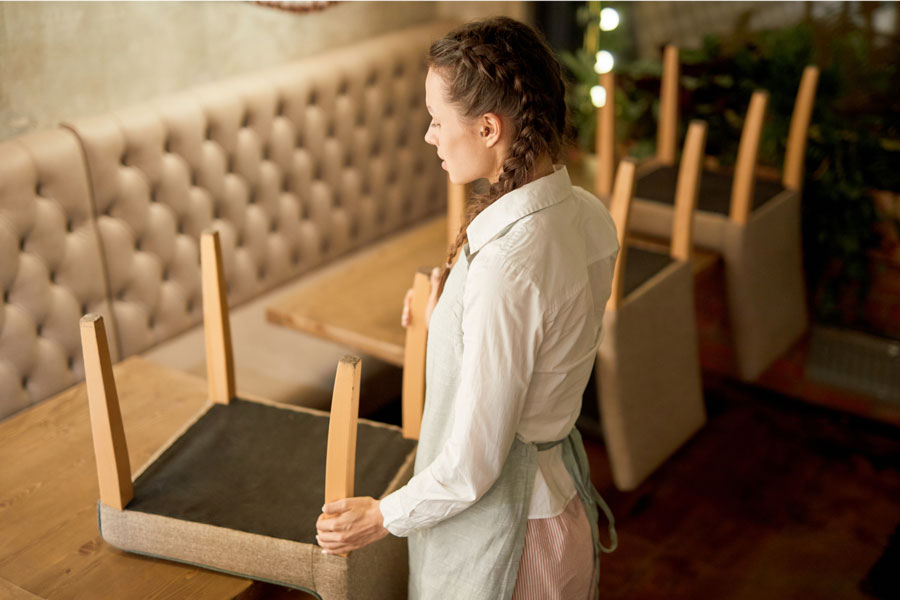
Within minutes, staff started rolling out cleaning equipment.
Chairs went up on tables all around me loudly, aggressively, not discreetly. Conversations between staff got louder and more personal. Lights up. Music lowered.
The message was crystal clear:
“We’re done here.”
I double-checked and Google said 10 p.m. Bartender confirmed 10 p.m.
My food arrived before 9:30, but the environment had completely changed. What should’ve been a relaxed drink turned into a rushed meal. Other guests felt it too and they started leaving.
By 9:35, I was essentially the only guest left.
No chance I was ordering another beer despite that being part of my plan. I finished quickly, paid, and was out by 9:40.
Total spend: about $25.
But here’s the real question:
Why would you make a paying guest feel so uncomfortable that they shorten their stay AND spend less?
What if I had walked by at 9:20 and saw chairs already up? I never would’ve come in.
From the outside, the restaurant looked closed. To any passerby, it was uninviting.
You didn’t just lose my second beer, you lost every potential guest walking by.
Experience #2: The High-End “Last Call” Mistake
Early March, NYC. I’m dining with two highly accomplished industry professionals. We chose a high-end sushi restaurant near Times Square.
Reservation: 30 minutes before their last seating.
Upon arrival the restaurant was about 35% full. A few tables were even seated after us.
We ordered promptly. Two of us ordered the most expensive items on the menu.
Halfway through the meal, the server approaches:
“The kitchen is closing. Anything else you’d like?”
Fair enough.
Then comes the kicker:
“This includes dessert.”
Wait…what?
You’re telling your highest-spending tables that dessert needs to be ordered now?
We didn’t even ask to see the menu.
Later, I looked and these desserts were simple. 30 seconds to plate.
Now let’s break this down:
- Dessert revenue lost
- After-dinner drinks lost (sake, espresso, cocktails)
- Guest experience diminished
- Negative feedback shared on-line
- Solicited your competition on same street for that spend
All to save what? A few minutes of labor…if any?
That dessert round alone perhaps could’ve covered one chef’s hourly wage, if not more.
Instead, you went backwards. Giving a competitor revenue and receiving a negative on-line review.
We left while the restaurant was still 20% full…barely 30 minutes past “closing.”
Experience #3: The Right Way to Do It
Two days later, Meatpacking District.
We’re seated at closing time.
The place is buzzing. The bar, packed. The dining room is full.
And yet, not once did we feel rushed.
We had cocktails, a bottle of wine, multiple courses, after-dinner drinks.
Our server even transitioned us smoothly to the closing server:
“Take your time. Enjoy your night.”
We left happy. Full. Impressed.
And yes, we spent.
Same city. Same type of guest. Completely different outcome.
One restaurant is thriving.
The other? Likely struggling.
The Disconnect: Hours vs. Reality
I recently consulted for a restaurant in a major tourist-driven downtown next to a convention center and arena.
90% of their business is out-of-town guests.
Posted Hours
10 p.m. weekdays
11 p.m. weekends
OpenTable Last Seating
9 p.m. weekdays
10 p.m. weekends
An hour gap.
Why?
The operator’s answer:
“The kitchen closes at 9:45 / 10:45.”
Let’s be clear:
Guests do not understand “kitchen closing.”
They understand:
- Are you open?
- Can I sit?
- Can I order?
If your Google says 10 p.m., but your kitchen closes at 9:45 p.m. and OpenTable stops at 9 p.m.…
You’re not just confusing guests, you’re losing them.
The Most Painful Example
Another property. Hotel bar. Admittedly unposted closing time: 10:30 p.m.
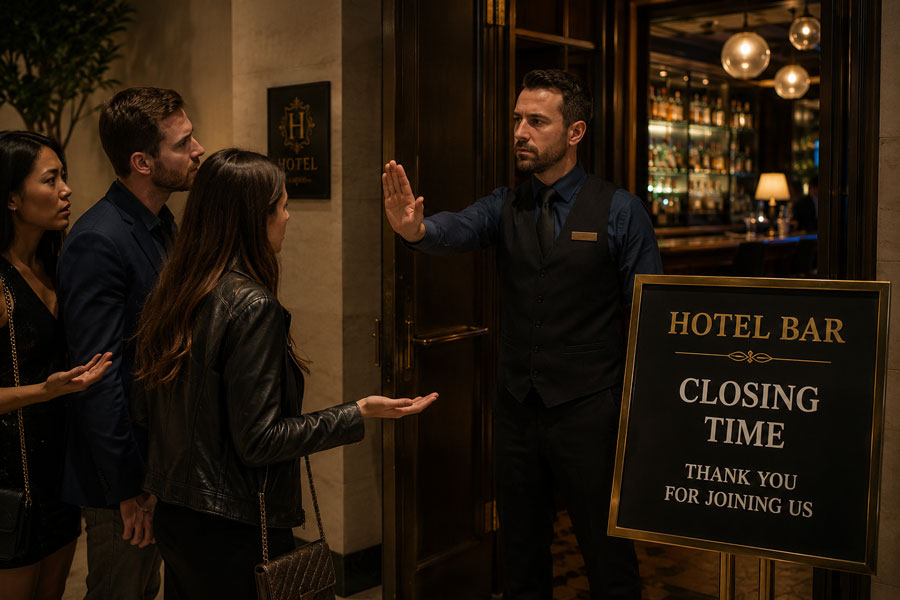
At 10:32, a group of 8–10 walks in.
Cash in hand.
They’re turned away.
This is downtown San Francisco. Automatic 20% gratuity.
Let's do the math:
- $200+ in revenue
- $40+ in gratuity
Turned away...for two minutes. Ten minutes of bartender work, as the kitchen closes at 9 p.m.
Why?
"We're closed."
No. You chose to be closed.
What Are You Telling Your Guests?
In every one of these situations, the message is the same:
“We’d rather close than accommodate you.”
And here’s the part operators need to understand:
Those guests are NEVER coming back.
Meanwhile, down the street:
- McDonald’s is packed
- White Castle is packed
Why?
Because when they say they’re open until midnight…
They mean it. No last orders at 11:45 p.m.
The Two Fastest Ways to Lose Guests
- Inconsistency
- Turning away willing spend
If I show up with money in hand, ready to spend—and you make it difficult, confusing, or uncomfortable…
You lose.
Not just tonight.
Forever.
Final Thought
If you want to close at 9:45—say 9:45.
If you want last seating at 9:30—say 9:30.
But stop the ambiguity. Stop the mixed signals. Stop prioritizing staff convenience over guest experience. Plan your budgets and consistency around these times.
Because every time you rush a guest out…or turn one away…
You’re not saving money.
You’re burning future revenue and bridges.
Losing one guest at a time is not a business model for long-term success.
Let’s be better.